
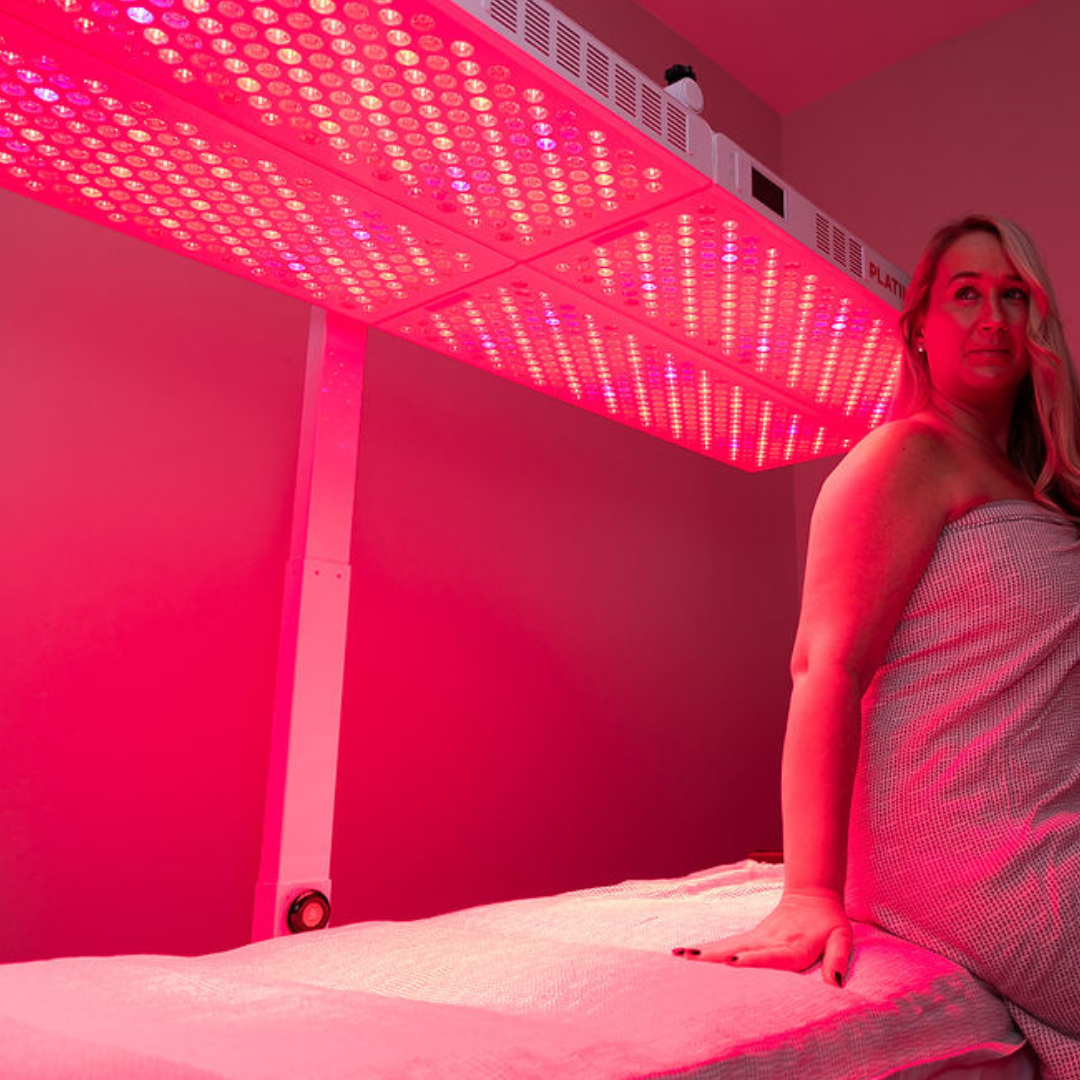
Imagine lying down on a table where a warm, gentle red glow could give your metabolism a little nudge — red light therapy (RLT) can do just that! It’s a non-invasive treatment using low-level red and near-infrared light that’s already popular for skin rejuvenation and muscle recovery. Could it also be a helpful partner on your weight loss and blood sugar control journey? Let’s look at the science!
What Is Red Light Therapy?
Red light therapy (also called photobiomodulation) uses specific wavelengths of red and near-infrared light to penetrate the skin and interact with cells. The idea is that this light stimulates the mitochondria — the “powerhouses” of our cells — helping them produce energy (ATP) more efficiently. When mitochondria are more energized, your cells may work better at burning energy and managing glucose. Healthline
Blood Sugar: Keep the Peaks Down
One of the most exciting discoveries around red light therapy is its ability to lower blood sugar levels and tame post-meal spikes — at least in the lab!
In a recent study, participants who received 15 minutes of red light exposure (670 nm) saw their average blood glucose levels drop by nearly 30% during a glucose tolerance test. They also experienced less glucose spiking afterward than those who didn’t receive the light treatment. Healthline
Why might this happen? Researchers think that because red light boosts mitochondrial energy production, cells may take up more glucose from the bloodstream for fuel — kind of like opening more doors for sugar to leave the blood and enter cells where it belongs. Medical News Today
This doesn’t mean RLT replaces meds or healthy eating — but it does suggest a potential role as an adjunct tool for metabolic health. Healthline
Weight Loss: More Energy, Less Cravings?
Think of your fat cells as tiny storage lockers. Red light therapy may help “unlock” some of the energy in those lockers, making fats more available to be used rather than just stored. Here’s what research shows:
Metabolism Boost in Humans
A clinical trial using red and near-infrared light found that resting energy expenditure increased by over 9% in women with obesity following exposure, meaning their bodies were burning more calories even while resting! PubMed
Body Measurements Improved
A broader analysis of multiple trials found that red light therapy modestly improved body weight, BMI, and waist circumference in people with obesity — so it’s not just anecdotal! PubMed
Better Insulin and Inflammation Markers
Some studies also show improvements in insulin resistance and inflammatory markers — both key players in metabolic health and weight regulation. PubMed
Because RLT may boost mitochondria and reduce inflammation, some people report feeling more energized with reduced cravings!
The Bottom Line
Red light therapy is a promising, non-invasive tool that may help support:
🌟 Improved blood sugar control
🌟 Increased resting metabolism
🌟 Weight and waistline improvements
🌟 Reduced inflammation and metabolic stress
Think of it like solar power for your cells — a gentle glow that might just help your metabolism hum a little happier!
BOOK Your Red Light appointmENT
Sources
Here are the studies and research we referenced:
- PBM increased resting energy expenditure in adults with obesity. PubMed
- Red light exposure reduced blood glucose levels after glucose intake in humans. Healthline
- Photobiomodulation may help improve body weight, BMI, and metabolic markers. PubMed
- PBM improved glucose metabolism and signaling in high-fat fed mice. PubMed
- Red light therapy boosts mitochondrial activity and may enhance glucose handling. Medical News Today
Disclaimer:
The information provided in this blog is intended for informational purposes only and does not constitute medical advice. Red light therapy (RLT) is a wellness treatment that may support various aspects of health, but it is not a substitute for professional medical care. We recommend consulting with a healthcare professional before starting any new treatment or therapy, particularly if you have underlying health conditions or concerns. Results may vary from person to person, and RLT should be used as part of a comprehensive approach to health and wellness.